Six weeks of engineering or one error message
Typical case studies have a few characteristics—the designer overseeing a large surface area or influencing a major business metric. This case study is not that. This showcases the unsexy but necessary side of product design work. It's disagreeing and influencing, pushing pixels for the edge cases that aren’t portfolio-worthy, but shipping for the user and for the business.
This story will tell:
- how I identified the root problem behind a symptom
- how I worked cross-functionally to problem solve
- how AI didn't replace my intuition and judgment, but how it accelerated the process
The problem
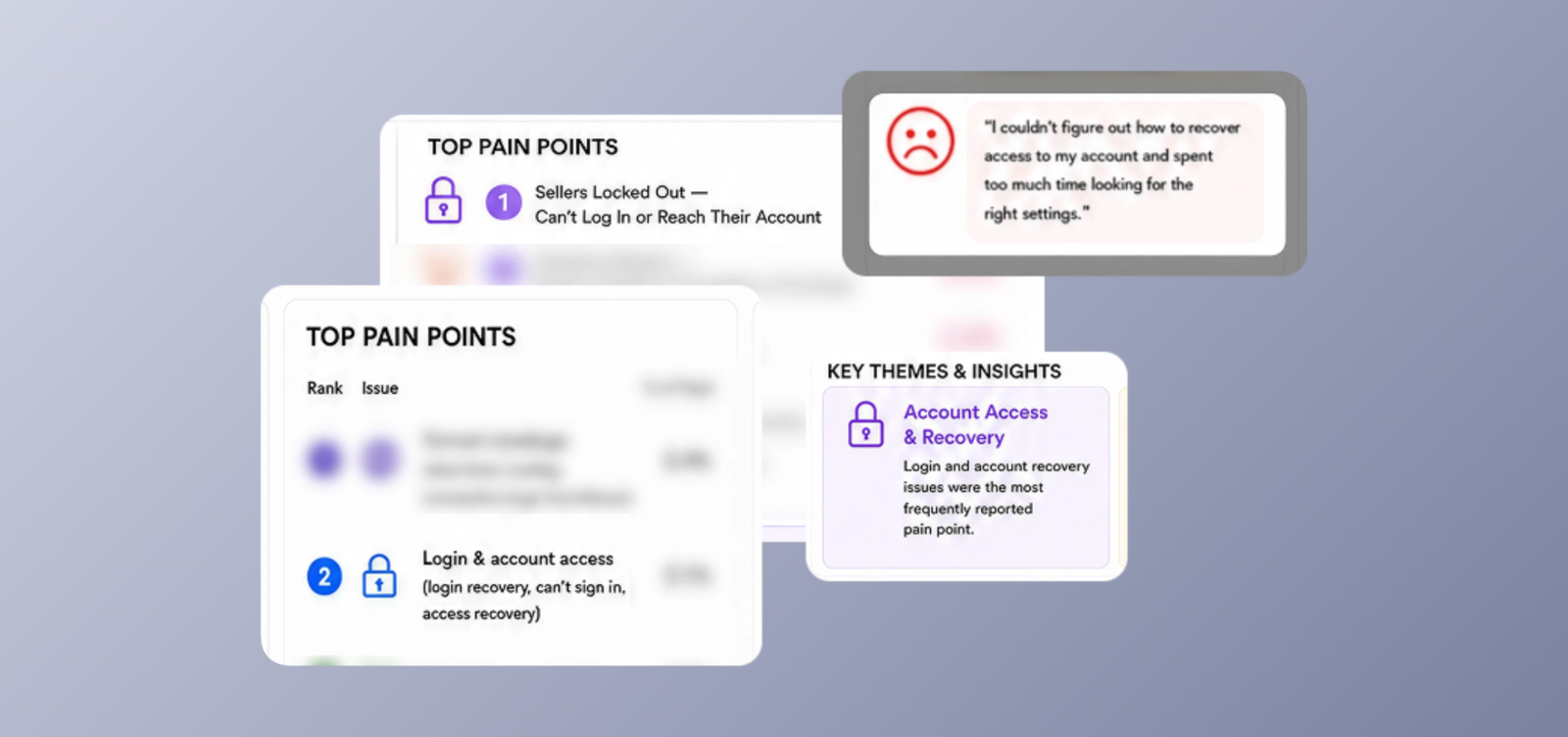
Duplicate account creation became one of the top five issues our support team was hearing. Support was reporting that sellers had multiple accounts and they couldn't figure out how to get to the right one.
Because of this, the team wanted to build an account switcher. Make it easier for sellers to toggle between their multiple accounts. A real solution, but a multi-week, multi-engineer one.
Something about it didn't sit right with me. Reports of this problem came in suddenly; it was not a slow structural trend. So, I dug in.
Root cause analysis
Before designing anything, I looked for what changed.
I reviewed the support conversations, and found sellers were trying to get rid of their second account. The new question was, why are sellers creating a second account to begin with? And how are they getting so confused?
I walked the signup-and-login flow the way a seller would. My PM looked into the timing of when the number of accounts started to rise.
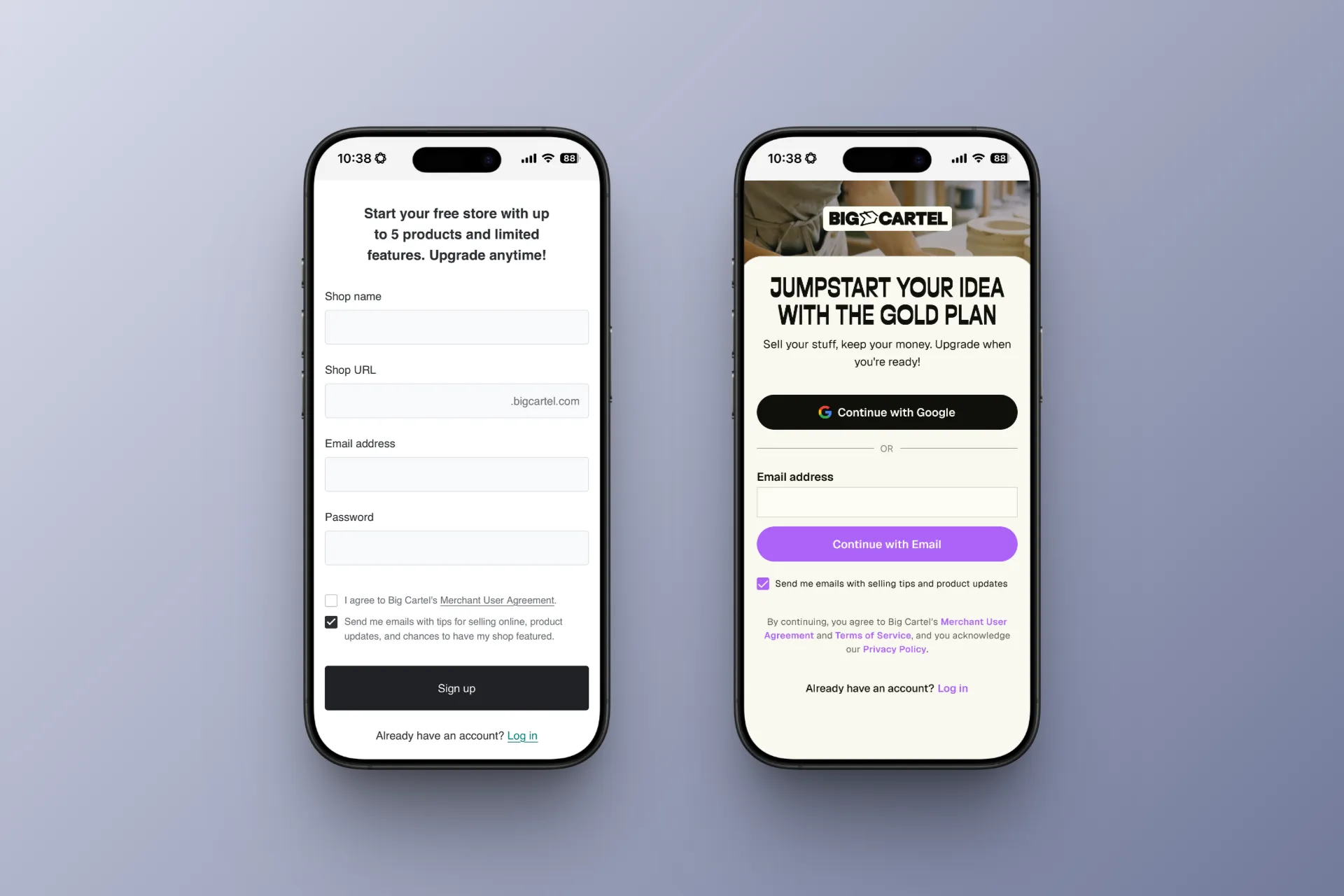
Putting two and two together, we figured it out.
The timing lined up exactly with changes recently made to the sign-up form:
- The sign-up fields changed from shop URL → email
- Shop URLs now became auto-assigned instead of sellers creating their own
- But, how people logged in didn’t change (with their shop URL)
The fix
I pushed back on the account switcher and proposed two fixes:
- Detect email in the URL field
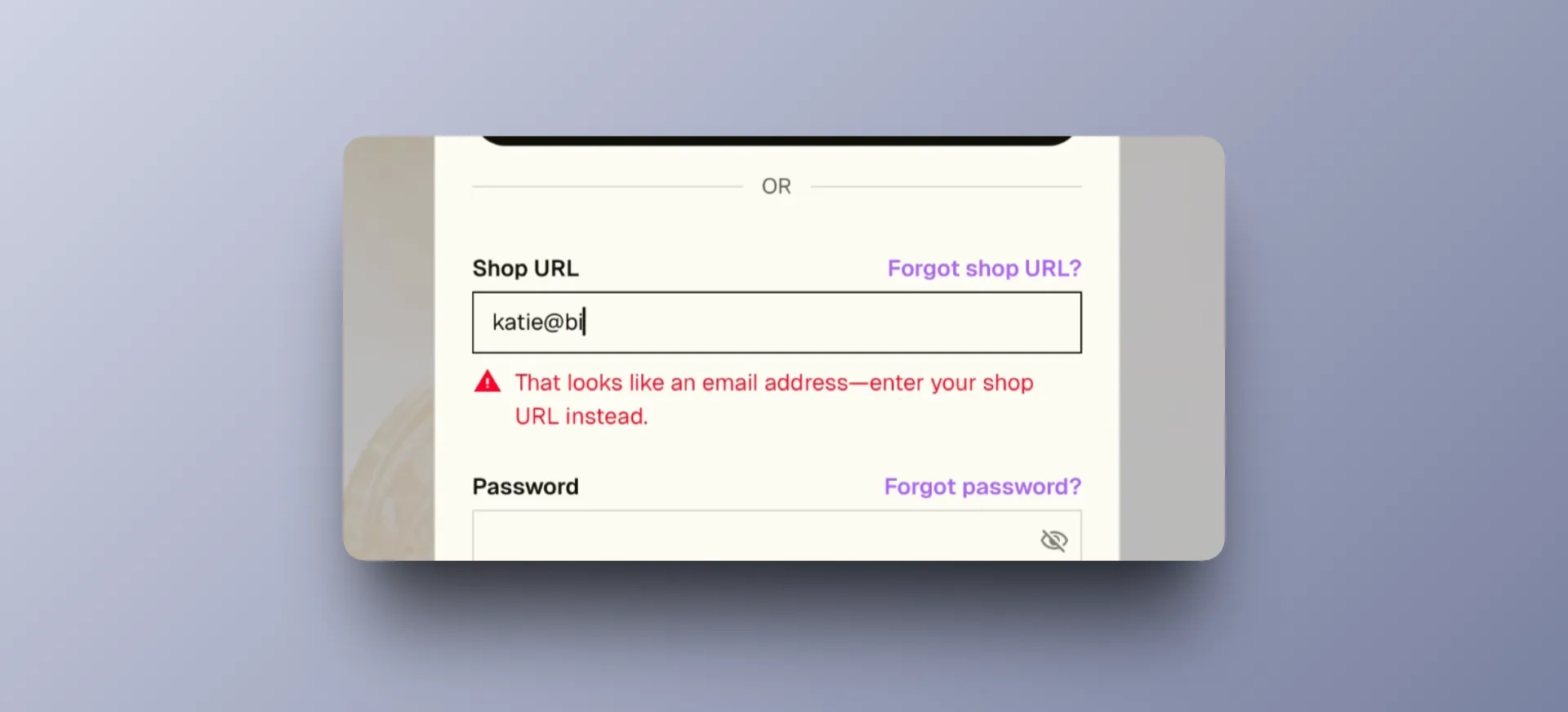
- Recover your shop URL flow. A link that emails sellers their shop URL, turning a forgotten URL from a dead end (and a second account) into a ten-second recovery.
Where AI changed things
I didn’t design in Figma. AI got me a working state fast once we were ready to execute, but I still reviewed every state, refining the copy and flow so what I handed off still met the craft bar.
Within the hour, I had 2 things: a working, shareable prototype based off our production code that I could show to cross-functional partners to illustrate the fixes, and a branch that engineering could draft off of or throw away.
This is the part I think is repeatable: For well-scoped problems, AI lets a designer independently close a real gap with real agency, complementing engineering and allowing them to stay focused.
The results
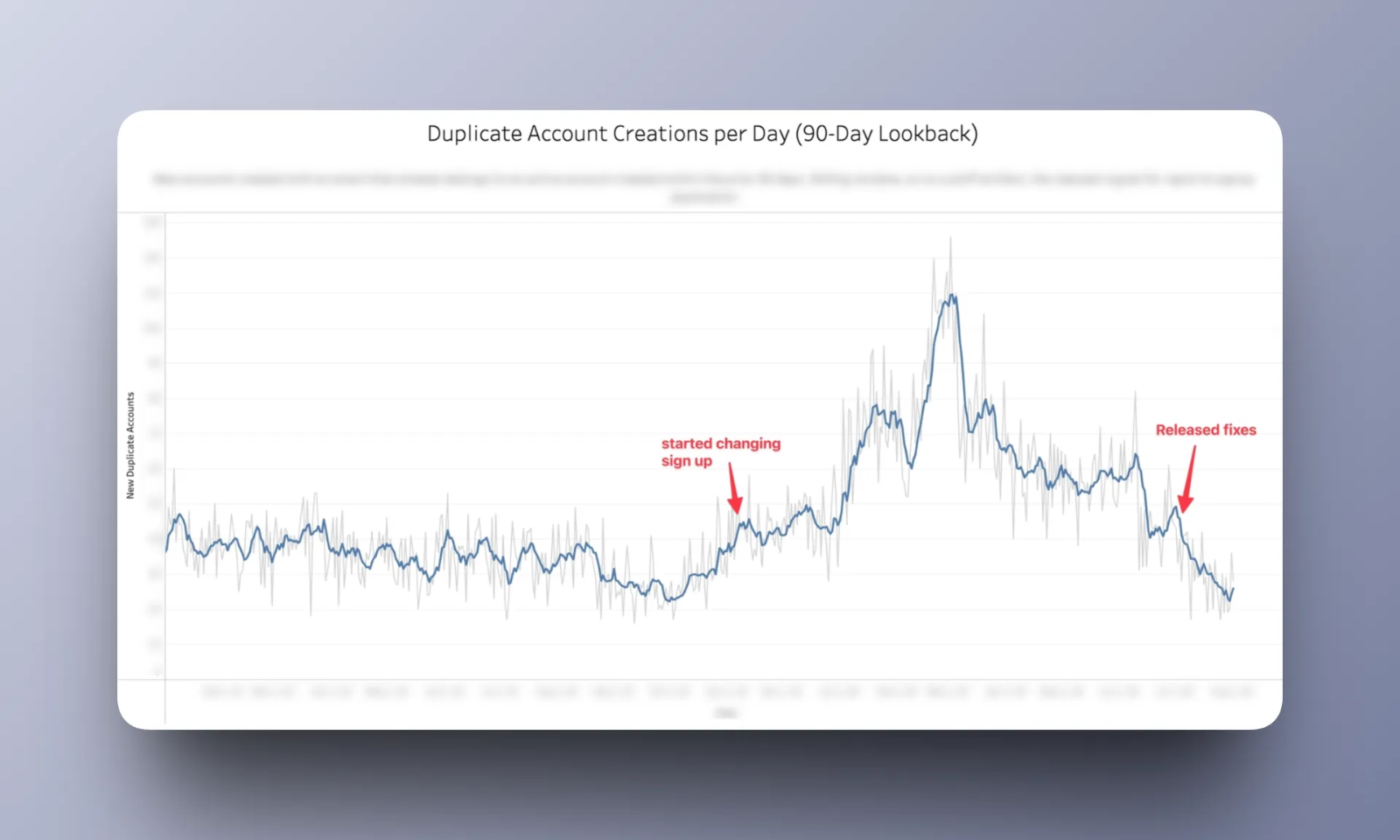
At the peak, duplicate accounts were 13% of our sign up volume. After we shipped our fixes, it's now back down to 4% below the original baseline, and is still trending down today. 🎉
What AI did and didn’t do
- AI didn’t replace my intuition and judgement for what and what shouldn't get built.
- AI did make the fix cheap.
- AI didn’t replace anyone. It amplified us. Alignment still mattered across product, design and engineering. In fact, our engineers' efforts to make building in our codebase with Claude so easy is what made this story possible. Thank you engineers!
- AI gave me agency, and saved my counterparts from context switching and getting pulled off their current projects.